Families exploring residential support options often look for solutions that feel safe, stable, and genuinely supportive. LifeSharing offers a unique approach to shared living that focuses on relationships, consistency, and everyday life. For many individuals with intellectual disabilities, this model provides meaningful benefits that go beyond basic support.
This guide explores the key benefits of LifeSharing and why it can be a positive, person-centered option.
What Is LifeSharing?
LifeSharing is a shared living arrangement where an individual lives in the home of a provider who offers daily support in a family-style setting. Instead of living in a facility or large residential setting, individuals join a household where support naturally fits into daily life.
The goal of LifeSharing is to create a supportive, stable home environment built on trust, respect, and shared experiences.
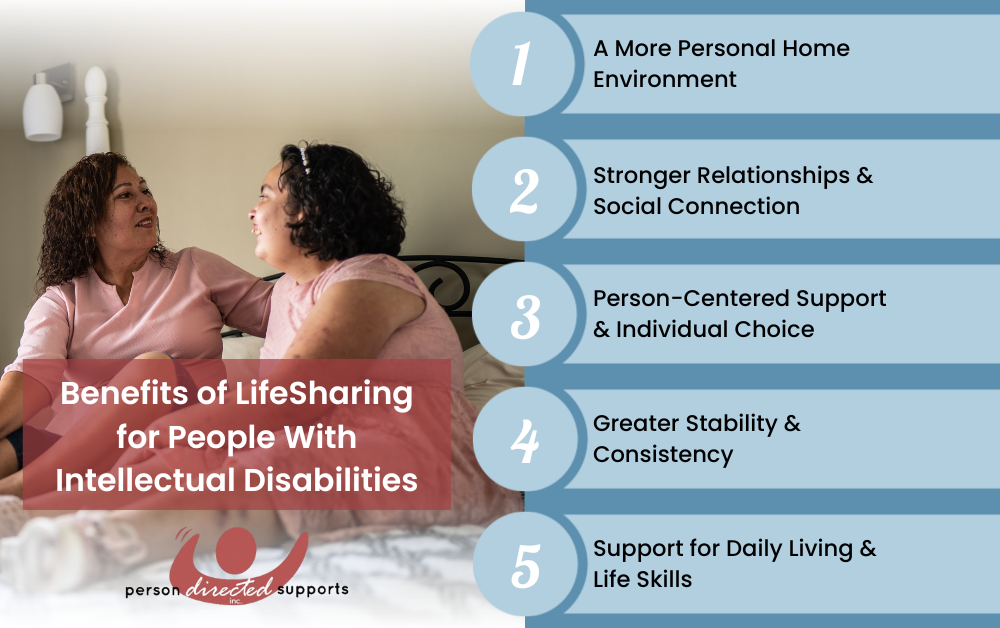
A More Personal Home Environment
One of the biggest benefits of LifeSharing is the opportunity to live in a real home. This setting provides:
- A sense of belonging
- Comfortable, familiar routines
- A household environment that feels natural
Living in a family-style home often helps individuals feel more relaxed and supported compared to more structured residential settings.
Stronger Relationships and Social Connection
LifeSharing encourages the development of meaningful, long-term relationships. Because individuals live with consistent caregivers, they are able to build trust and emotional connections over time.
This model supports:
- Strong bonds with providers
- Daily social interaction
- Increased emotional support and understanding
These relationships can have a lasting positive impact on emotional well-being.
Person-Centered Support and Individual Choice
LifeSharing centers on person-centered care. LifeSharing tailors support to each individual’s goals, preferences, and daily routines, while encouraging choice in areas such as:
- Daily activities
- Meals and household routines
- Social involvement
- Personal goals
This level of flexibility helps individuals feel respected and empowered.
Greater Stability and Consistency
Stability is an essential part of quality support. LifeSharing offers:
- A consistent living environment
- Reliable daily routines
- Ongoing support from familiar caregivers
Reduced transitions and changes can help individuals feel secure and supported, which is especially important for emotional well-being.
Support for Daily Living and Life Skills
LifeSharing supports skill development through everyday experiences. Individuals receive guidance and encouragement with:
- Household responsibilities
- Personal care routines
- Communication and social skills
- Building independence at a comfortable pace
Learning in a natural home setting helps skills feel practical and achievable.
Community Involvement and Inclusion
Individuals in LifeSharing homes are encouraged to stay connected to their communities. This includes:
- Participating in local activities
- Maintaining family and social relationships
- Exploring hobbies and interests
Community involvement helps build confidence and supports a more fulfilling daily life.
LifeSharing Compared to Other Residential Options
Unlike larger residential settings, LifeSharing offers a more individualized and relationship-based approach. While it may not be the right fit for everyone, it can be an excellent option for individuals who thrive in a family-style environment with consistent support.
Choosing the right residential option depends on personal needs, preferences, and long-term goals.
Who Is a Good Fit for LifeSharing?
LifeSharing may be a good fit for individuals who:
- Prefer a smaller, home-based living environment
- Benefit from consistent relationships and routines
- Are working toward greater independence
- Value being part of a household
Families should consider individual needs and explore whether this shared living model aligns with long-term support goals.
Why LifeSharing Matters
LifeSharing provides a supportive, stable living option that emphasizes relationships, independence, and community connection. For many people with intellectual disabilities, this shared living model offers a meaningful alternative to traditional residential services.
By focusing on person-centered support in a real home environment, LifeSharing helps individuals build confidence, develop life skills, and experience a true sense of belonging.
Learn More About LifeSharing With Person Directed Supports
If you’re exploring LifeSharing for yourself or a loved one, Person Directed Supports is here to help. Our team can answer your questions, explain how LifeSharing works, and help you decide if this shared living option is the right fit.
Contact Person Directed Supports to start the conversation.