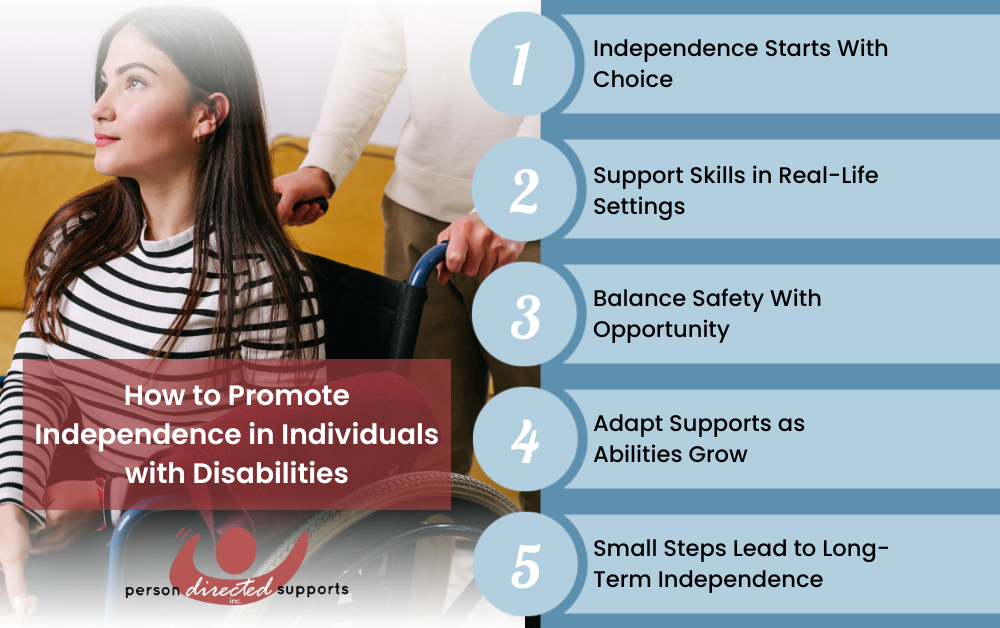
Independence looks different for every person, and that truth sits at the heart of meaningful disability support. For individuals with disabilities, independence is not about doing everything alone or meeting someone else’s idea of “self-sufficiency.” It is about having the opportunity, support, and confidence to make choices, express preferences, and participate in daily life in ways that feel authentic and empowering. When we promote independence in individuals with disabilities, we are honoring their right to direct their own lives, no matter the level of support they may need.
What Independence Looks Like in Everyday Life
At its core, independence is rooted in autonomy and dignity. It shows up in everyday moments: choosing what to wear, deciding how to spend free time, voicing an opinion about a meal, or taking part in household routines. These moments may seem small from the outside, but for individuals with disabilities, they are foundational to self-worth and identity. Independence grows through consistent access to daily decision-making and the chance to learn from both successes and mistakes, just like anyone else.
The Role of Support in Building Independence
Promoting independence does not mean removing disability supports. In fact, the right supports are often what make independence possible. When services are flexible and responsive, individuals can build independence skills at their own pace. This might involve learning how to manage personal care routines, practicing communication skills, developing social connections, or exploring employment and volunteer opportunities. Independence is not a destination. It is an ongoing process shaped by personal goals, life stages, and changing needs.
Why Self-Determination Matters
Self-determination plays a critical role in this process. Individuals with disabilities deserve to be active participants in decisions that affect their lives, rather than passive recipients of care. When people are encouraged to speak up, set goals, and make informed choices, they develop confidence and a stronger sense of control. This sense of control often leads to greater engagement, improved emotional well-being, and deeper connections within families and communities.
The Partnership Between Families, Caregivers, and Individuals
Families and caregivers are essential partners in promoting independence. Their role often involves balancing safety with opportunity, support with freedom. This balance can be challenging, especially when concerns about risk or failure arise. However, growth rarely happens without some level of risk. Creating environments where individuals feel safe to try, to learn, and to advocate for themselves helps independence skills take root and grow over time.
How Communities Support Independence
Community members also play a meaningful role. Inclusive neighborhoods, workplaces, and social spaces send a powerful message that individuals with disabilities belong and are valued. When communities remove barriers and offer genuine opportunities for participation, independence becomes a shared responsibility rather than an individual burden.
Independence Is About Voice, Participation, and Choice
This blog explores what it truly means to promote independence in individuals with disabilities and why it matters so deeply. By focusing on dignity, choice, and practical support, we can move beyond assumptions and create pathways that respect each person’s unique abilities and aspirations. Independence is not about doing more. It is about being more involved, more heard, and more in control of one’s own life.
Practical Ways to Encourage Independence While Providing Support
Promoting independence is most effective when it is woven into everyday life, not treated as a separate goal or milestone. Independence grows through consistent opportunities, respectful guidance, and supports that adjust as skills develop. The following strategies focus on practical, real-world ways families and support professionals can encourage growth while honoring safety, dignity, and individual choice.
Building Independence Through Skill Development
Teaching Skills in Real-Life Contexts
Independence skills are best learned where they will actually be used. Instead of practicing tasks in isolation, support individuals during real routines such as preparing a simple meal, managing personal belongings, or navigating transportation. For example, a support professional might walk alongside an individual during grocery shopping, gradually shifting from step-by-step guidance to observation as confidence increases. Learning in context helps skills transfer naturally into daily life.
Breaking Tasks Into Manageable Steps
Many independence skills become achievable when they are broken into smaller, realistic steps. Rather than focusing on completing an entire task independently, supports can focus on one part at a time. Someone learning to manage laundry might start by sorting clothes before progressing to operating the machine. Each completed step builds momentum and reduces frustration, reinforcing the idea that progress is meaningful even when it is gradual.
Allowing Different Ways to Succeed
Independence does not require tasks to be completed in one “correct” way. Adaptive tools, visual schedules, reminders, or technology can support independence skills without diminishing autonomy. When individuals are allowed to find methods that work best for them, skill-building becomes empowering rather than limiting.
Encouraging Choice and Decision-Making
Offering Meaningful Daily Choices
Choice-making is a cornerstone of independence. Supports can intentionally create opportunities for individuals to make decisions throughout the day, not just during major life events. Choices might include selecting activities, deciding the order of tasks, or choosing how to spend free time. Even small decisions reinforce self-determination and help individuals understand that their preferences matter.
Respecting Preferences Even When They Differ
Promoting independence sometimes means accepting choices that caregivers might not make themselves. As long as health and safety are not compromised, honoring personal preferences builds trust and confidence. For example, an individual may prefer a different daily routine or social activity than what others expect. Respecting these choices supports autonomy and strengthens self-advocacy skills.
Balancing Safety With Independence
Assessing Risk Without Eliminating Opportunity
Safety is a valid concern, but overprotection can unintentionally limit growth. A balanced approach involves identifying potential risks and finding ways to reduce them without removing independence entirely. For instance, rather than preventing someone from cooking, supports might focus on safe appliance use and supervision that fades over time. This approach teaches responsibility while maintaining necessary safeguards.
Learning Through Supported Experience
Mistakes are a natural part of learning. When individuals are supported through challenges rather than shielded from them, they gain resilience and problem-solving skills. A person who forgets a step in a routine can be guided to reflect and try again, rather than having the task taken over completely. These experiences build confidence and long-term independence.
Adapting Supports as Individuals Grow
Gradually Fading Support
Effective disability supports evolve over time. As independence skills strengthen, supports can shift from direct assistance to prompts, reminders, or periodic check-ins. This gradual fading communicates trust and reinforces capability. It also allows individuals to take greater ownership of their routines and responsibilities.
Revisiting Goals and Expectations
Independence is not static. Goals should be revisited regularly to reflect changes in interests, abilities, and life circumstances. What felt challenging one year may become routine the next. Ongoing conversations ensure supports remain aligned with the individual’s growth and aspirations rather than staying fixed out of habit.
Encouraging independence while providing appropriate support is an ongoing, collaborative process. When families and professionals focus on ability, choice, and growth, independence becomes less about removing help and more about offering the right support at the right time. This approach fosters confidence, self-determination, and meaningful participation in everyday life.
Supporting Long-Term Independence With Respect and Purpose
Promoting independence is not a one-size-fits-all effort, and it is never a finished task. To promote independence in individuals with disabilities, families, caregivers, and support professionals must commit to an ongoing process built on trust, flexibility, and respect for individual choice. Independence grows when people are given opportunities to build skills, make decisions, and participate in daily life with supports that adapt as needs and abilities change.
Throughout this conversation, one theme remains consistent: independence is about involvement, not isolation. It thrives when disability supports are thoughtfully designed to encourage growth rather than replace effort. Skill-building, choice-making, routines, and confidence-building all work together to create a foundation where individuals feel capable and valued. Just as important is the balance between safety and opportunity. When supports are flexible and responsive, individuals can take meaningful steps forward without unnecessary limitations.
One of the most powerful insights is how small, everyday choices shape long-term independence. Choosing what to wear, deciding how to spend free time, or taking responsibility for part of a daily routine may seem minor, but these moments reinforce self-determination and personal agency. Over time, these experiences build confidence, resilience, and a stronger sense of identity.
For families and supporters, promoting independence requires patience and openness. It means trusting individuals to grow at their own pace and allowing supports to evolve alongside them. When independence is approached with dignity and intention, it becomes a shared journey rooted in possibility. Every step forward, no matter how small, is meaningful and worth celebrating.