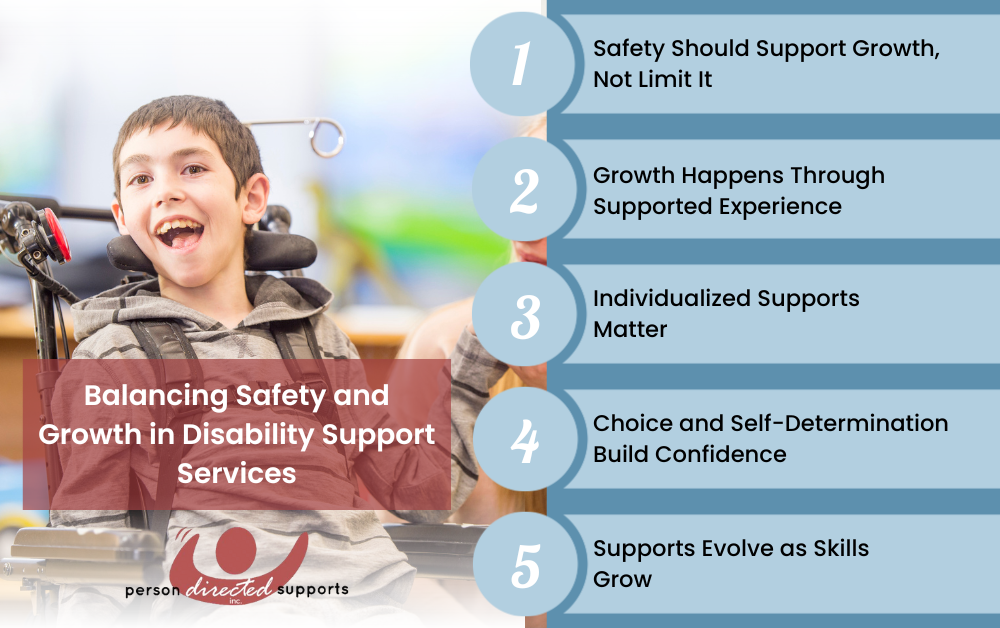
Balancing safety and growth is one of the most complex and meaningful responsibilities within disability support services. Families, caregivers, and professionals all want the same outcome: individuals who are safe, supported, and able to live fulfilling lives. Yet safety and growth are sometimes mistakenly viewed as opposing forces. In reality, they are deeply connected. True growth cannot happen without thoughtful attention to safety, and safety becomes most meaningful when it supports personal development rather than limiting it.
Growth Happens Through Experience, Not Avoidance
For individuals with disabilities, growth often happens through experience. Trying new routines, learning new skills, and navigating unfamiliar situations are all part of building confidence and independence. These experiences may involve uncertainty, and at times, manageable risk. When support systems focus solely on preventing risk, opportunities for learning and self-discovery can be unintentionally reduced. On the other hand, when growth is encouraged without appropriate safeguards, individuals may feel overwhelmed or unsupported. The goal is not to choose one over the other, but to find balance.
Safety as a Foundation, Not a Limitation
Safety within disability support services should be understood as creating a foundation of stability, not a set of restrictions. It involves proactive planning, clear communication, and supports that adapt to individual needs. When safety is approached thoughtfully, it allows individuals to explore new opportunities with confidence rather than fear. Growth becomes possible because individuals know they are supported, respected, and not alone in the process.
Recognizing Growth in Many Different Forms
Growth shows up in many forms. It may be learning a new daily living skill, navigating social relationships, advocating for personal preferences, or taking on new responsibilities. These moments are often gradual and deeply personal. What feels like a small step to one person may represent a significant milestone to another. Disability support services play a crucial role in recognizing and honoring this progress, no matter the pace.
Understanding Risk as Part of Learning
A balanced approach recognizes that risk is not inherently negative. All people learn through experience, including moments that do not go as planned. For individuals with disabilities, being allowed to make choices and learn from outcomes is an important part of developing self-determination. The role of support is not to eliminate every possible challenge, but to reduce unnecessary barriers while remaining present and responsive.
Supporting Families Through Shared Responsibility
Families and caregivers often feel the weight of this balance most strongly. Concerns about health, safety, and long-term well-being are real and valid. At the same time, protecting individuals from every potential difficulty can limit confidence and independence over time. Open communication, shared decision-making, and flexible support strategies help families and professionals work together toward common goals.
This blog explores how disability support services can thoughtfully balance safety and growth without sacrificing dignity or autonomy. By focusing on trust, adaptability, and individual strengths, supports can create environments where people feel secure enough to take meaningful steps forward. Safety and growth are not competing priorities. When approached with intention, they work together to support fuller participation, stronger confidence, and a more empowered life.
Practical Strategies for Balancing Safety and Growth
Finding the right balance between safety and growth requires intentional planning, flexibility, and ongoing communication. It is not about choosing strict rules or unlimited freedom, but about creating supportive environments where individuals can safely explore new opportunities and build confidence over time.
Individualized Risk Assessment, Not Blanket Restrictions
Safety planning works best when it is individualized. Rather than applying the same rules to everyone, supports should focus on understanding each person’s abilities, preferences, and comfort level. This might involve identifying specific risks related to a task and addressing those risks directly, instead of removing the task altogether. For example, if someone wants to learn to travel independently, supports might focus on route planning, communication strategies, and check-in systems rather than limiting travel entirely.
When risks are assessed thoughtfully, individuals are more likely to feel trusted and respected. This approach reinforces the idea that safety exists to support participation, not prevent it.
Teaching Skills Through Supported Practice
Growth happens most effectively when individuals are given opportunities to practice skills with guidance that adjusts over time. Supported practice allows individuals to try new tasks while knowing help is available if needed. A support professional might initially model a task, then shift to verbal prompts, and eventually step back as confidence grows.
This gradual approach reduces anxiety and helps individuals build competence without feeling overwhelmed. It also allows supports to respond in real time, offering reassurance or problem-solving assistance when challenges arise.
Encouraging Growth Through Choice and Responsibility
Involving Individuals in Safety Planning
One powerful way to balance safety and growth is to include individuals directly in conversations about safety. Asking questions like “What feels challenging?” or “What would help you feel more comfortable trying this?” empowers individuals to take ownership of their decisions. This involvement strengthens self-awareness and reinforces personal responsibility.
When individuals understand why certain supports are in place, they are more likely to engage with them and advocate for adjustments as their skills develop.
Allowing Natural Consequences When Appropriate
Learning often involves experiencing natural consequences. When safe to do so, allowing individuals to experience outcomes helps reinforce problem-solving and decision-making skills. For example, if someone forgets to bring an item needed for an activity, supports can help them reflect and plan for next time rather than immediately fixing the situation.
These moments build resilience and confidence, showing individuals that challenges are manageable and part of growth.
Adjusting Supports as Confidence Increases
Fading Supports With Intention
As individuals gain experience, supports should evolve. This might mean reducing supervision, changing the type of assistance provided, or allowing more independence within familiar routines. Fading supports communicates trust and reinforces progress while still keeping safety in mind.
Regular check-ins ensure that changes are supportive rather than abrupt, helping individuals feel secure as responsibilities increase.
Reviewing and Updating Support Strategies
Balancing safety and growth is not static. Interests change, skills improve, and new goals emerge. Regularly revisiting support strategies allows families and professionals to adjust expectations and celebrate progress. What once required close support may later become a point of pride and independence.
When safety and growth are approached as complementary goals, disability support services can create environments where individuals feel both protected and empowered. This balance supports meaningful participation, builds confidence, and encourages lifelong learning in ways that honor dignity and individual choice.
Supporting Growth Without Losing Sight of Safety
Balancing safety and growth in disability support services requires trust, flexibility, and thoughtful decision-making. Safety should serve as a foundation that allows individuals to explore new opportunities, build skills, and gain confidence rather than restricting their experiences. When supports are responsive and individualized, they create space for growth while continuing to protect health and well-being.
Growth often happens through small, everyday experiences. Trying new routines, making choices, and learning from manageable challenges help build self-determination and confidence over time. For families, caregivers, and support professionals, this balance depends on collaboration and open communication. When safety and growth are approached as connected goals, individuals are better supported in developing independence, resilience, and a stronger sense of control over their own lives.