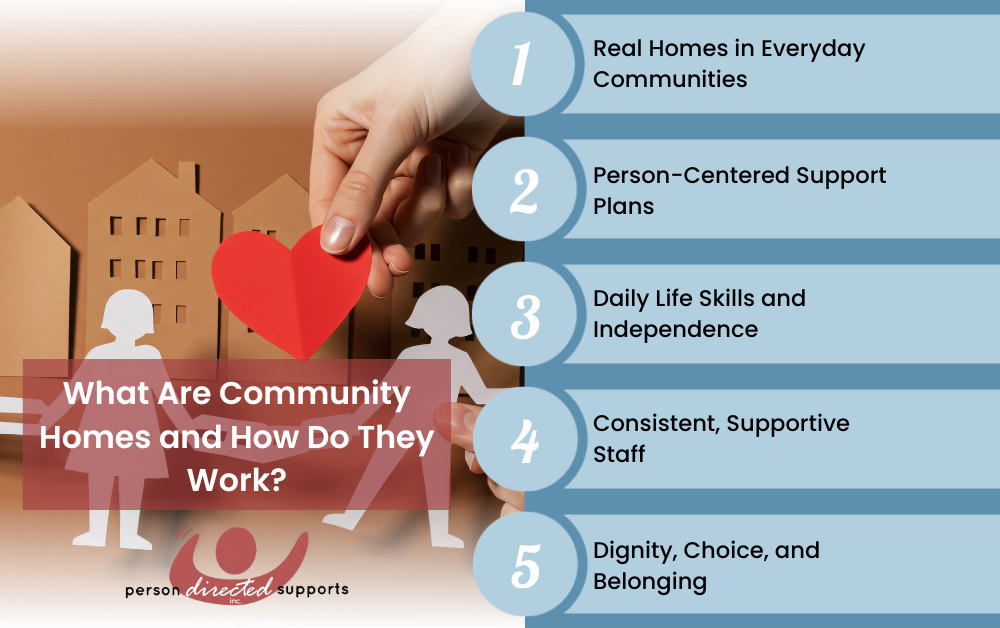
Choosing the right living environment is one of the most important decisions for individuals with intellectual and developmental disabilities and their families. For many, community homes offer a supportive balance of independence, structure, and connection. But what exactly are community homes, and how do they work on a day-to-day basis?
This guide explains what community homes are, how they operate, and who they are designed to support so families can make informed decisions with confidence.
What Are Community Homes?
Community homes are residential living environments where individuals receive support while living in a real home within the community. These homes are designed to feel just like any other house in a neighborhood, not like an institutional setting.
The focus of community homes is on dignity, comfort, and belonging. Each home supports individuals in a way that respects their preferences, routines, and personal goals, allowing them to live meaningful, fulfilling lives in a familiar environment.
Key Characteristics
- Small, residential settings
- Located in everyday neighborhoods
- Designed to feel like home, not a facility
- Built around person-centered support plans
How Do Community Homes Work?
Community homes provide structured support while encouraging independence. Each individual receives assistance based on their specific needs, abilities, and goals.
Daily Support and Staffing
Support staff are present to help with daily living while promoting independence whenever possible. Support may include:
- Assistance with personal care
- Help with meal planning and cooking
- Support with medication routines
- Transportation to appointments, work, or activities
Staff focus on guidance and encouragement rather than control, helping individuals build confidence and life skills.
Person-Centered Planning
At the heart of community homes is person-centered planning. Support services are guided by what matters most to each individual, including:
- Personal goals
- Daily routines and preferences
- Social interests
- Long-term independence plans
This approach ensures support is flexible and evolves as needs and goals change.
Who Are Community Homes Designed For?
Community homes are designed for adults with intellectual and developmental disabilities who:
- Want to live in a stable, supportive environment
- Benefit from consistent routines and structure
- Are working toward greater independence
- Enjoy being part of a community setting
They are especially beneficial for individuals who need daily support but still want choice, autonomy, and a sense of home.
What Life Looks Like in a Community Home
Daily life in a community home is meant to feel natural and familiar. Individuals participate in everyday activities just like anyone else living in a household.
Supporting Independence and Life Skills
Community homes focus on skill development, including:
- Household responsibilities
- Budgeting and money management
- Social and communication skills
- Health and wellness routines
These experiences help individuals gain confidence and prepare for greater independence over time.
How Community Homes Support Quality of Life
Community homes do more than provide housing. They support emotional well-being, social connection, and personal growth. Benefits include:
- A sense of stability and routine
- Strong relationships with support staff and housemates
- Opportunities for community involvement
- A feeling of belonging and purpose
When individuals feel supported and respected, quality of life improves in meaningful ways.
Community Homes vs Other Residential Support Options
Unlike larger or more structured residential settings, community homes prioritize:
- Individual choice
- Personalized support
- Flexibility in daily routines
- Integration into the surrounding community
This makes community homes a preferred option for individuals who value independence while still needing reliable support.
How to Know if a Community Home Is the Right Fit
When considering community homes, families and individuals should think about:
- Desired level of independence
- Support needs and daily routines
- Comfort with shared living environments
- Long-term personal goals
Touring homes and asking questions about support philosophy can help ensure the right fit.
Why Community Homes Matter
Community homes provide a supportive, person-centered living option that balances independence with daily support. By offering a real home environment, individualized planning, and opportunities for growth, community homes help individuals build meaningful lives within their communities.
For those exploring residential support options, understanding how community homes work is an important step toward finding a place that truly feels like home.
Learn More About Community Homes at Person Directed Supports
If you’re exploring community homes for yourself or a loved one, Person Directed Supports is here to help. Our team is happy to answer questions, discuss support options, and help you understand what living in a community home could look like. Contact Person Directed Supports today to start the conversation.