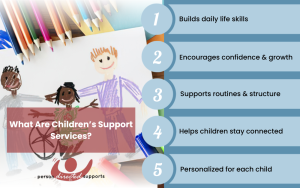
Independence looks different for everyone, but it often starts with the ability to manage everyday tasks with confidence. Developing the right life skills for independence helps individuals take control of their routines, make decisions, and participate more fully in daily life.
These skills are not just about completing tasks—they are about building confidence, creating structure, and supporting long-term growth. With the right support and encouragement, individuals can continue developing skills that lead to greater independence over time.
Why Life Skills Matter for Independence
Life skills form the foundation of daily living. They help individuals navigate routines, communicate effectively, and manage responsibilities in a way that feels meaningful and achievable.
Independence does not mean doing everything alone. It means having the skills, tools, and support needed to make choices and handle daily life with confidence. Person-centered support plays an important role by helping individuals develop these skills at a pace that works for them.
Essential Life Skills That Support Daily Living
Developing life skills for independence happens over time through everyday experiences. Below are some of the most important skill areas that support independence.
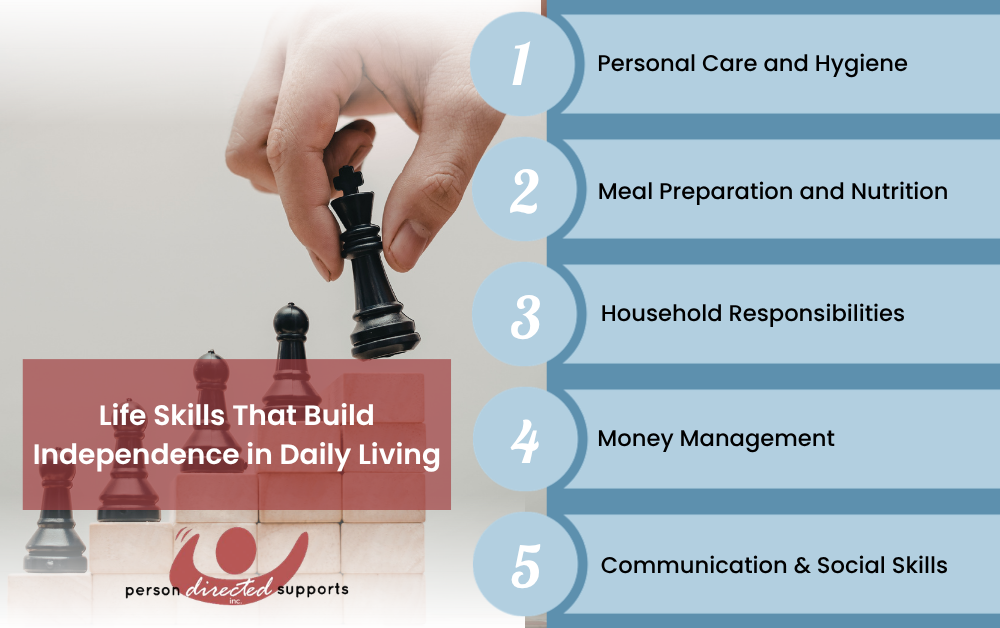
1. Personal Care and Hygiene
Personal care routines are a key part of daily life. Skills like bathing, grooming, and dressing help individuals maintain their health and feel confident.
Building consistency in these routines can:
- Create structure in the day
- Improve self-confidence
- Support overall well-being
2. Meal Preparation and Nutrition
Learning how to prepare simple meals and make healthy food choices is an important step toward independence.
This includes:
- Planning basic meals
- Understanding food safety
- Making balanced food choices
These skills help individuals feel more confident and capable in their daily routines.
3. Household Responsibilities
Maintaining a living space helps build responsibility and pride in one’s environment. Household skills may include:
- Cleaning and organizing
- Laundry and basic upkeep
- Following simple chore routines
Over time, these tasks become part of a predictable and manageable routine.
4. Money Management
Understanding how to manage money is an important life skill. Even basic skills can make a meaningful difference in independence.
Examples include:
- Budgeting for everyday needs
- Understanding spending and saving
- Making informed purchasing decisions
These skills help individuals feel more in control of their daily lives.
5. Communication and Social Skills
Strong communication skills allow individuals to express their needs, preferences, and ideas clearly. Social skills also help build meaningful relationships.
These skills support:
- Clear communication with others
- Building friendships and connections
- Participating in community activities
Confidence in communication can improve many areas of daily life.
6. Time Management and Routine Building
Creating and following a daily routine helps individuals stay organized and prepared. Time management skills may include:
- Following a daily schedule
- Understanding the order of tasks
- Planning activities throughout the day
Consistent routines provide structure and help reduce stress.
7. Community Navigation
Being able to engage with the community is an important part of independence. This may involve:
- Participating in local activities
- Using transportation when appropriate
- Navigating familiar environments
These experiences help individuals feel more comfortable and confident outside the home.
How Support Services Help Build Life Skills
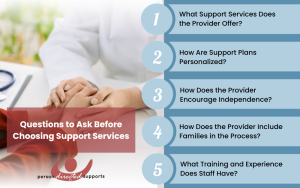
Support services play an important role in developing life skills for independence. Rather than taking over tasks, support focuses on teaching, guiding, and encouraging individuals.
Effective support services:
- Tailor skill development to individual goals
- Use real-life situations to teach practical skills
- Provide consistency and encouragement
- Focus on progress over perfection
This approach helps individuals build confidence while developing skills that last.
Building Independence Takes Time
Independence is a gradual process. Progress may happen in small steps, and each step matters.
Some individuals may master certain skills quickly, while others may take more time. The key is to provide patience, encouragement, and consistent support. Over time, these small achievements lead to meaningful growth.
Building Independence Through Everyday Skills
Developing life skills for independence empowers individuals to take an active role in their daily lives. From personal care to communication and community involvement, each skill contributes to greater confidence and self-sufficiency.
Independence is not about doing everything alone—it is about having the ability and support to live a meaningful, fulfilling life. With the right guidance and opportunities, individuals can continue building skills that support long-term success.
Support Growth Through Everyday Skills
If you’re looking for support services that focus on building independence through life skills, Person Directed Supports is here to help. Reach out to learn how individualized support can make a meaningful difference.