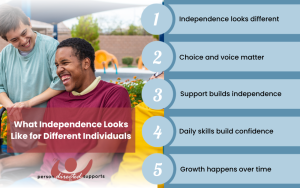
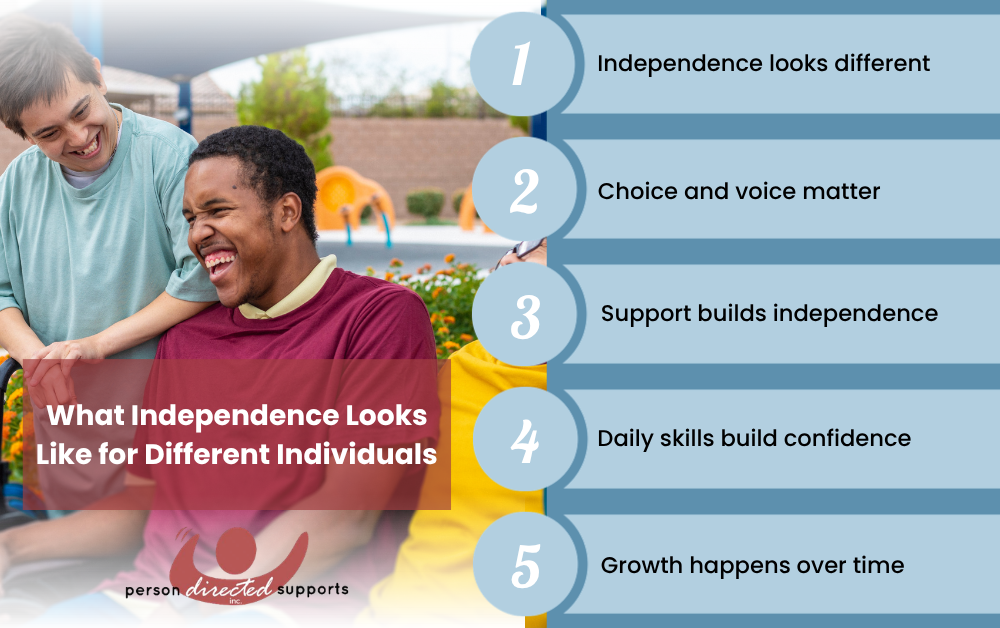
Independence is often talked about as a goal—but it doesn’t look the same for everyone. Many people think independence means doing everything on your own, but in reality, independence is much more personal than that.
For individuals with disabilities, independence is about having choice, control, and the ability to participate in daily life in a way that feels meaningful. This blog explores what independence really means and how it can look different for each individual.
What Does Independence Really Mean?
Independence is not about doing everything alone. It’s about having the ability—and the support—to make decisions, express preferences, and take part in everyday life.
True independence means:
- Having a voice in daily routines
- Making personal choices
- Participating in activities that matter
Support can play an important role in independence. With the right support, individuals can build skills and confidence while still maintaining control over their lives.
Why Independence Looks Different for Everyone
Every individual has unique abilities, experiences, and goals. Because of this, independence will look different for each person.
Factors that shape independence include:
- Personal strengths and challenges
- Daily routines and lifestyle
- Support needs and preferences
- Long-term goals
Person-centered support ensures that independence is defined by the individual—not by a standard set of expectations.
Examples of Independence in Daily Life
Independence can show up in many ways throughout the day. It is not one big milestone but a collection of everyday moments.
Independence in Personal Care
For some individuals, independence means managing personal care routines like dressing, grooming, or hygiene. For others, it may involve completing parts of these routines with support.
What matters most is that individuals feel confident and involved in their daily care.
Independence in Decision-Making
Making choices is a key part of independence. This can include:
- Choosing what to eat
- Deciding how to spend free time
- Setting personal goals
Even small decisions play a big role in building confidence and self-direction.
Independence in the Home
Participating in household routines helps individuals feel connected to their living environment.
This may include:
- Helping with cleaning or organizing
- Preparing meals
- Following a daily routine
Independence in the home builds responsibility and a sense of ownership.
Independence in the Community
Being part of the community is another important part of independence. This can involve:
- Attending events or activities
- Visiting familiar places
- Spending time with friends or family
These experiences help individuals build confidence and social connections.
Independence Through Communication
Communication allows individuals to express their needs, preferences, and ideas.
This includes:
- Sharing thoughts and opinions
- Asking for help when needed
- Building relationships with others
Strong communication skills support independence in every area of life.
How Support Services Help Build Independence
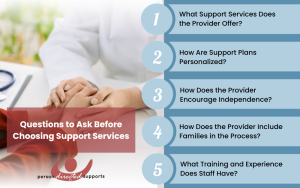
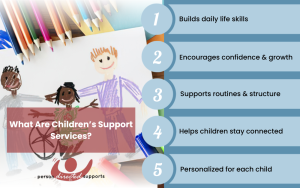
Support services play an important role in helping individuals develop independence. Rather than taking over tasks, support focuses on teaching, guiding, and encouraging.
Effective support services:
- Build skills through everyday experiences
- Encourage individuals to make choices
- Provide consistency and support when needed
- Focus on growth over time
This approach helps individuals gain confidence while continuing to develop new abilities.
Breaking Common Misconceptions About Independence
There are several common misunderstandings about independence that can limit how it is viewed:
- Independence means doing everything alone
In reality, independence often includes the right level of support. - Needing support means a lack of independence
Support can strengthen independence, not take it away. - Independence is a final goal
Independence is ongoing and can grow and change over time.
The Role of Person-Centered Support in Independence
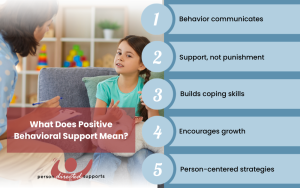
Person-centered support helps individuals define what independence looks like for them. It focuses on:
- Individual goals and preferences
- Encouraging choice and participation
- Adapting support as needs change
This approach ensures that independence is meaningful, realistic, and achievable.
Independence Is a Personal Journey
Independence is not a single definition or milestone—it is a personal journey that looks different for every individual. It is built through daily choices, experiences, and support.
By focusing on dignity, choice, and growth, individuals can continue developing independence in ways that fit their lives. With the right support, independence becomes not just possible, but meaningful.
Support Independence in a Way That Fits the Individual
Person Directed Supports helps individuals build independence through personalized, person-centered support. Reach out to learn more about how support services can make a difference.