Community engagement plays an important role in building confidence, independence, and a sense of belonging. For many individuals, being active in the community means more than simply going out. It means having opportunities to connect with others, participate in meaningful activities, and feel comfortable in everyday settings.
Support services help make these connections possible. By offering guidance, encouragement, and practical assistance, these services remove barriers that can limit participation and help individuals engage with their communities in ways that feel safe and empowering. Understanding the role support services play in community engagement highlights how thoughtful, individualized support can create lasting opportunities for growth, connection, and independence.
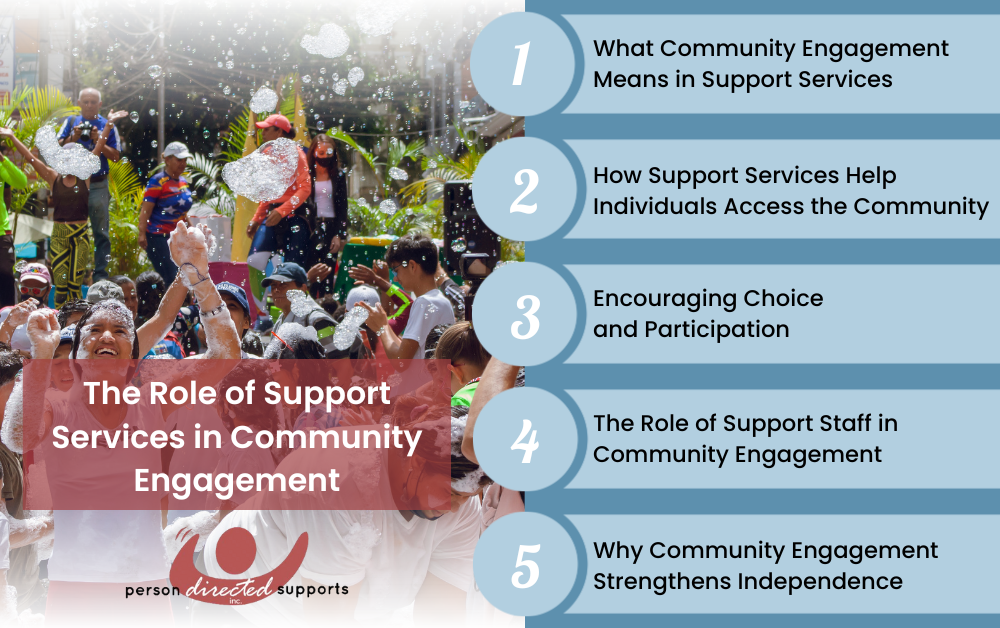
What Community Engagement Means in Support Services
Community engagement within support services goes beyond attending events or visiting public places. It focuses on meaningful participation that aligns with an individual’s interests, comfort level, and personal goals. Engagement can look different for each person, and these services are designed to honor those differences rather than apply a single definition of involvement.
In this context, community engagement may include building social connections, participating in local activities, or simply becoming more comfortable navigating everyday environments. Support services help individuals engage in ways that feel purposeful and achievable, reinforcing independence while respecting personal boundaries. By focusing on meaningful participation rather than participation for its own sake, these services help individuals feel more connected and confident within their communities.
How Support Services Help Individuals Access the Community
Support services play an important role in removing barriers that can make community involvement difficult. Through practical assistance and encouragement, individuals are better able to participate in activities that support independence and connection.
Support services may help by:
- Assisting with transportation to community activities and appointments
- Supporting planning and preparation for outings
- Encouraging participation in social and recreational activities
- Helping individuals build confidence in new environments
- Providing guidance while allowing individuals to lead their experiences
By addressing these everyday challenges, support services make community engagement more accessible and comfortable, helping individuals participate at a pace that feels right for them.
Encouraging Choice and Participation
Choice is a key part of meaningful community engagement. Support services encourage individuals to participate in activities that reflect their interests, goals, and comfort levels rather than pushing involvement that does not feel meaningful or appropriate.
Through ongoing communication and observation, support services help individuals explore opportunities while respecting personal preferences. Participation is guided by the individual, with support adjusted as confidence grows. By allowing individuals to choose how and when they engage, support staff create positive experiences that build trust, confidence, and a stronger sense of independence within the community.
The Role of Support Staff in Community Engagement
Support staff play an important role in helping individuals feel comfortable and confident while engaging with their community. Their role is not to lead every interaction, but to provide encouragement, reassurance, and guidance as needed while allowing individuals to remain in control of their experiences.
In community settings, support staff may:
- Offer encouragement in new or unfamiliar environments
- Help navigate social situations when support is needed
- Step back as confidence and independence increase
- Provide consistency that builds trust over time
By offering the right level of support at the right time, support staff help community engagement feel positive, empowering, and centered on the individual.
Why Community Engagement Strengthens Independence
Community engagement supported by thoughtful services helps individuals build confidence and independence over time. Regular involvement in community activities encourages familiarity with everyday environments and reinforces important life skills that support long-term growth.
When individuals are actively engaged in their communities, they often experience:
- Increased confidence in social and public settings
- Stronger communication and relationship-building skills
- Greater comfort navigating daily activities
- Improved decision-making and problem-solving abilities
- A stronger sense of belonging
By encouraging meaningful participation, support services help individuals build independence in ways that feel natural, supportive, and aligned with personal goals.
Conclusion
Community engagement plays an important role in building confidence, independence, and meaningful connections. With the right approach, support services help individuals feel comfortable participating in their communities while respecting personal preferences and goals.
At Person Directed Supports, support services are designed to encourage community engagement in ways that feel purposeful and empowering. By focusing on individual choice and thoughtful guidance, support services help create opportunities for connection, growth, and independence that strengthen quality of life over time.