Choosing a living arrangement is one of the most important decisions individuals and families can make. As support needs change and goals evolve, many families begin exploring options that provide both independence and personalized support. One option that often comes up is a community home.
For families who are unfamiliar with community homes, knowing when to consider this type of support can feel overwhelming. Understanding what community homes offer and recognizing signs that they may be a good fit can help families make informed decisions with confidence.
What Is a Community Home?
A community home provides individuals with a safe, supportive, home-like environment where they can live while receiving personalized support based on their unique needs and goals.
Community homes focus on:
- Independence and personal growth
- Community involvement and inclusion
- Daily living support
- Person-centered care
Rather than living in a large institutional setting, individuals live in a home environment that encourages participation, choice, and meaningful relationships.
Why Families Consider Community Homes
Families explore community homes for many different reasons. Some individuals want greater independence, while others benefit from additional support with daily routines and responsibilities.
Community homes can provide:
- Consistent support and guidance
- Opportunities to develop life skills
- Social interaction and community involvement
- Long-term stability and planning
Every situation is unique, but community homes often help individuals build confidence while maintaining a strong support system.
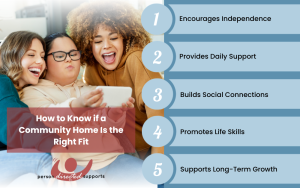
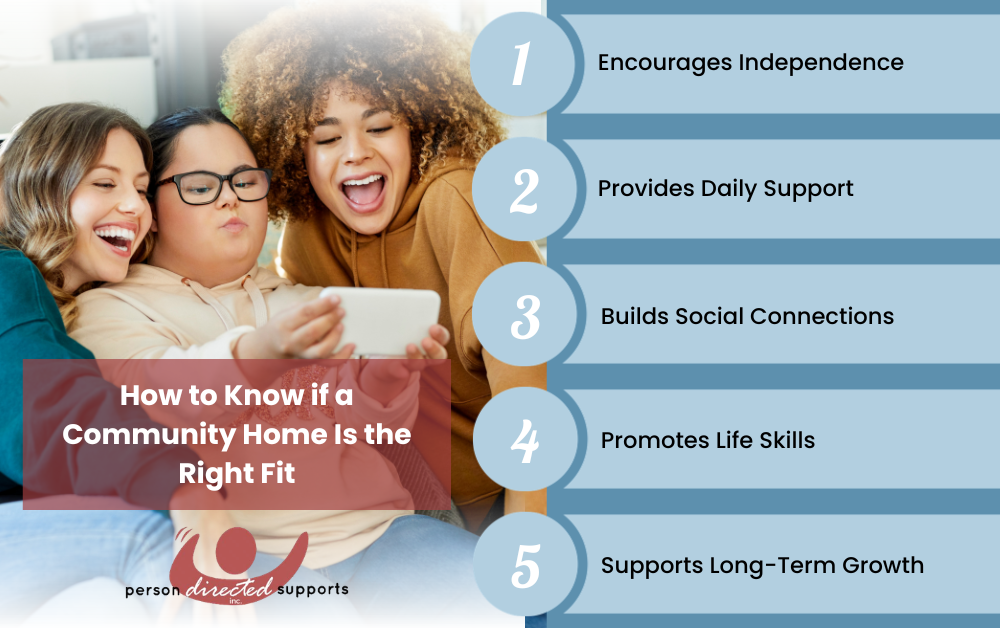
Signs a Community Home May Be the Right Fit
There is no single reason why a community home may be the right choice. Instead, families often notice several factors that make this option worth exploring.
The Individual Wants More Independence
Many individuals want greater control over their daily lives and opportunities to make more of their own decisions.
This may include:
- Managing daily routines
- Learning new life skills
- Making choices about activities and goals
- Becoming more involved in the community
A community home can provide the support needed while encouraging independence and personal growth.
Daily Support Needs Are Increasin
As individuals grow and their needs change, they may require more consistent support with everyday responsibilities.
Families may notice challenges with:
- Following daily routines
- Managing household responsibilities
- Staying organized
- Completing daily living tasks independently
Community homes offer structure and support while helping individuals continue developing important life skills.
Families Need Additional Support
Providing care for a loved one can be rewarding, but it can also become challenging over time. Families sometimes need additional resources and support to ensure their loved one continues receiving quality care.
A community home can:
- Share caregiving responsibilities
- Provide consistent support and supervision
- Help reduce stress on family members
- Allow families to focus on maintaining strong relationships
Seeking additional support is not a sign of failure. It is often a proactive step toward long-term success and stability.
The Individual Would Benefit From Social Opportunities
Community homes create opportunities for individuals to build relationships and engage with others.
Benefits may include:
- Developing friendships
- Participating in community activities
- Learning teamwork and cooperation
- Building social confidence
These experiences help individuals stay connected and engaged in meaningful ways.
Long-Term Planning Is Becoming a Priority
Many families begin exploring community homes as part of future planning.
Questions may arise such as:
- What will living arrangements look like in the future?
- How can independence continue to grow over time?
- What support will be available as needs change?
Community homes can provide stability while helping individuals prepare for long-term success and independence.
Questions Families Should Ask When Exploring a Community Home
As families learn more about community homes, asking questions can help determine whether a particular option is a good fit.
Important questions may include:
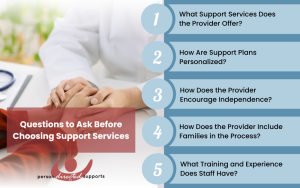
- What support services are available?
- How are support plans personalized?
- How are daily routines structured?
- How does the home encourage independence?
- How are families involved in planning and communication?
The answers can provide valuable insight into how support is delivered and whether it aligns with the individual’s goals.
What Makes a Community Home Successful?
Several factors contribute to a positive community home experience.
Successful community homes often include:
- Person-centered support
- Consistent and compassionate staff
- Opportunities for skill development
- Strong communication with families
- Active community involvement
When these elements work together, individuals have opportunities to grow while feeling supported and valued.
How Community Homes Support Independence
One of the primary goals of a community home is helping individuals build independence.
Community homes support independence by:
- Encouraging daily decision-making
- Teaching practical life skills
- Promoting responsibility and accountability
- Providing support without removing choice
This balanced approach helps individuals gain confidence while continuing to develop important skills.
Why Every Situation Is Different
There is no one-size-fits-all answer when it comes to living arrangements. A community home may be an excellent fit for one individual while another person may have different goals or support needs.
The most important factor is finding an option that aligns with the individual’s:
- Personal goals
- Support needs
- Preferences
- Vision for the future
Thoughtful planning and open communication help families make the best decision for their unique situation.
Conclusion: Finding the Right Living Environment
Choosing a community home is a personal decision that should reflect the individual’s goals, strengths, and support needs. For many individuals, community homes provide a balance of independence, structure, and personalized support that encourages growth and long-term success.
By learning about available options, asking thoughtful questions, and focusing on individual goals, families can make informed decisions that support a meaningful and fulfilling future.
Explore Community Home Options With Confidence
Person Directed Supports provides community home services designed to help individuals live with dignity, independence, and personalized support. Contact our team to learn more about available community home options and how they may fit your family’s needs.