Mental health and emotional well-being are closely tied to the support people receive in their daily lives. For individuals living with disabilities, compassionate and reliable care can shape how safe, confident, and emotionally balanced they feel. Disability support services are fundamental to supporting mental health by addressing emotional, social, and practical needs together. Organizations like Person Directed Support recognize that meaningful care must support the whole person, not just daily tasks.
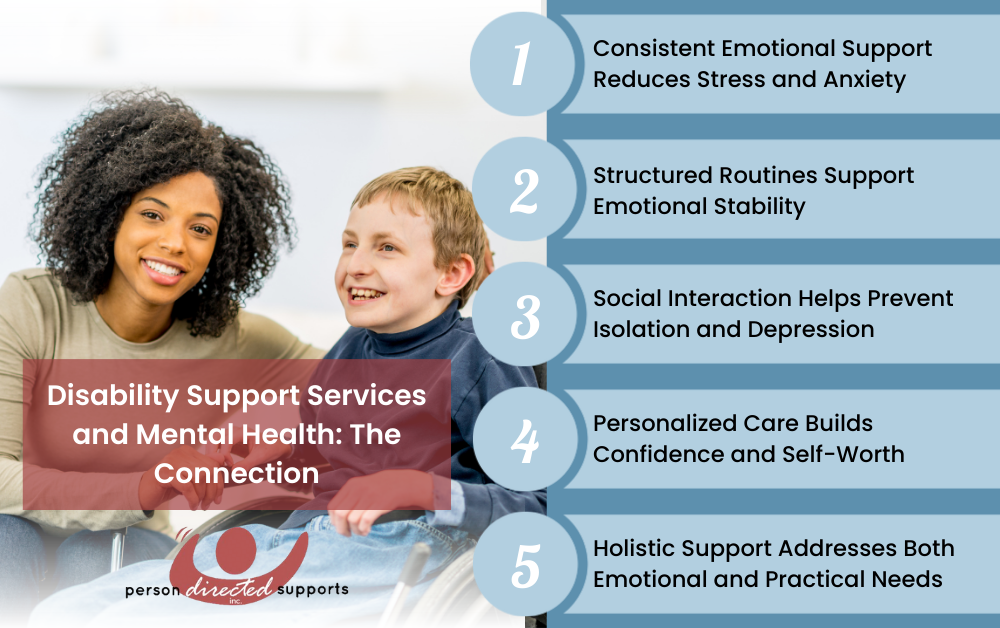
Consistent Emotional Support Reduces Stress and Anxiety
Building Trust Through Ongoing Relationships
Disability support services often provide consistent relationships with familiar caregivers or support workers. This continuity builds trust and emotional safety over time. Knowing who will be present reduces uncertainty and daily stress. Trust-based relationships create a stable foundation for mental well-being.
- Familiar support workers promote emotional comfort
- Consistency reduces fear of change or unpredictability
- Trust supports openness and emotional resilience
Feeling Heard and Understood
Being listened to with empathy can significantly reduce anxiety and emotional overwhelm. Disability support services prioritize understanding individual needs, preferences, and communication styles. Feeling heard helps individuals feel respected and valued. This emotional validation strengthens self-worth and mental stability.
- Active listening supports emotional expression
- Feeling understood reduces frustration and stress
- Respectful care reinforces emotional security
Emotional Reassurance in Daily Life
Consistent emotional reassurance helps individuals navigate challenges with confidence. Disability support services encourage during stressful moments or transitions. Knowing support is available eases emotional strain. Reassurance fosters calmness and emotional balance over time.
- Emotional encouragement builds confidence
- Reliable reassurance reduces anxiety
- Support during transitions promotes stability
Structured Routines Support Emotional Stability
Predictability Creates a Sense of Calm
Structured routines provide predictability, which is essential for mental well-being. Disability support services help establish consistent schedules for meals, activities, and rest. Predictability reduces emotional stress caused by uncertainty. Routine creates a sense of safety and calm.
- Consistent schedules reduce anxiety
- Predictability supports emotional grounding
- Daily rhythm promotes mental clarity
Reducing Stress Through Daily Structure
A daily structure helps individuals focus on the present rather than worry about what comes next. Disability support services ease mental strain by managing routines and expectations. This support reduces decision fatigue and stress. Structured days encourage emotional balance.
- Reduced planning lowers stress levels
- Clear expectations support emotional comfort
- Structure promotes a sense of control
Supporting Focus and Mood Regulation
Reliable routines improve concentration and emotional regulation. Knowing what to expect helps individuals manage energy and emotions more effectively. Disability support services reinforce consistency throughout the day. This stability supports positive mood patterns.
- Routine supports emotional regulation
- Predictability improves focus
- Consistency reduces emotional swings
Social Interaction Helps Prevent Isolation and Depression
Encouraging Meaningful Connections
Disability support services encourage meaningful social interaction through community involvement and shared activities. These connections help individuals feel seen and valued. Social engagement supports emotional health and confidence. Regular interaction reduces isolation.
- Community activities promote connection
- Shared experiences support emotional health
- Interaction reduces loneliness
Strengthening a Sense of Belonging
Feeling included plays a significant role in mental well-being. Disability support services help individuals participate in their communities in ways that feel safe and empowering. This inclusion fosters belonging and acceptance. A strong sense of belonging reduces emotional distress.
- Inclusion strengthens emotional security
- Belonging supports positive self-identity
- Acceptance reduces feelings of isolation
Supporting Emotional Expression Through Interaction
Social interaction allows individuals to express thoughts and emotions openly. Disability support services encourage communication at each person’s comfort level. Emotional expression supports mental clarity and self-awareness. These interactions contribute to long-term emotional health.
- Expression supports emotional release
- Communication builds self-confidence
- Interaction strengthens mental well-being
Personalized Care Builds Confidence and Self-Worth
Individual Goals at the Center of Care
Personalized disability support services place individual goals at the forefront of care. This approach respects each person’s right to choose what matters most to them. Feeling in control strengthens confidence and self-esteem. Goal-focused care supports emotional well-being.
- Individual goals promote autonomy
- Choice supports emotional empowerment
- Personalized care builds confidence
Promoting Independence and Self-Esteem
Support tailored to abilities encourages independence rather than limitation. Achieving personal milestones builds pride and self-worth. Disability support services reinforce growth at a comfortable pace. Increased independence positively affects mental health.
- Independence strengthens self-esteem
- Progress builds emotional resilience
- Support encourages personal growth
Encouraging Positive Coping Skills
Personalized care helps individuals develop coping strategies that fit their emotional needs. Disability support services recognize personal stressors and emotional triggers. This awareness supports healthier responses to challenges. Strong coping skills improve emotional stability.
- Coping strategies reduce stress
- Emotional awareness supports resilience
- Personalized support strengthens confidence
Holistic Support Addresses Both Emotional and Practical Needs
Caring for the Whole Person
Disability support services address emotional, social, and physical needs together. This approach places mental health at the center of care which is essential to overall well-being. Balanced care leads to stronger emotional outcomes. Whole-person support improves quality of life.
- Emotional and practical needs are interconnected
- Balanced care supports mental health
- Whole-person support improves outcomes
Integrating Emotional Care Into Daily Support
Emotional care is often woven into daily interactions and routines. Disability support services provide reassurance and encouragement throughout the day. This integration makes emotional support consistent and accessible. Mental well-being becomes part of everyday care.
- Emotional support is ongoing
- Encouragement builds confidence
- Daily care supports mental health
Long-Term Benefits for Quality of Life
Holistic disability support services promote long-term emotional and mental stability. Supporting the whole person leads to stronger coping skills and fulfillment. Comprehensive care improves overall life satisfaction. Long-term support fosters emotional resilience.
- Holistic care improves stability
- Long-term support builds resilience
- Balanced care enhances fulfillment
Conclusion
The connection between disability support services and mental health is essential and far-reaching. Emotional support, structured routines, social connection, personalized care, and holistic approaches all contribute to well-being. When individuals feel supported in every aspect of life, they are better equipped to manage stress and build confidence. Person Directed Support is dedicated to providing disability support services that honor the whole person, and those seeking compassionate, reliable care are encouraged to reach out and explore support options that truly make a difference.
If you or a loved one are looking for compassionate, reliable support, don’t wait to explore the difference quality disability support services can make. Reach out today to connect with experienced caregivers who prioritize mental health, independence, and whole-person well-being. Discover how personalized care can empower daily living and improve quality of life. Contact Person Directed Support today to learn more and take the first step toward meaningful, supportive care.