Transitions are a normal part of life, but they can sometimes feel overwhelming for children and teens. Changes like starting a new school year, adjusting to a new routine, moving, or navigating schedule changes can create stress and uncertainty. While some children adapt quickly, others may need more guidance and structure during these periods of change.
Recognizing the signs early can help families provide the right level of care and determine whether additional support may be beneficial.
Why Transitions Can Be Difficult
Transitions often disrupt routines, expectations, and familiar environments. For children and teens, these changes can affect emotions, behavior, communication, and daily functioning.
Common transitions may include:
- Returning to school after summer break
- Changing schools or classrooms
- Adjusting to new schedules or routines
- Changes at home or in family dynamics
Periods of change can make stress, anxiety, or behavioral challenges more noticeable, especially when routines and predictability shift.
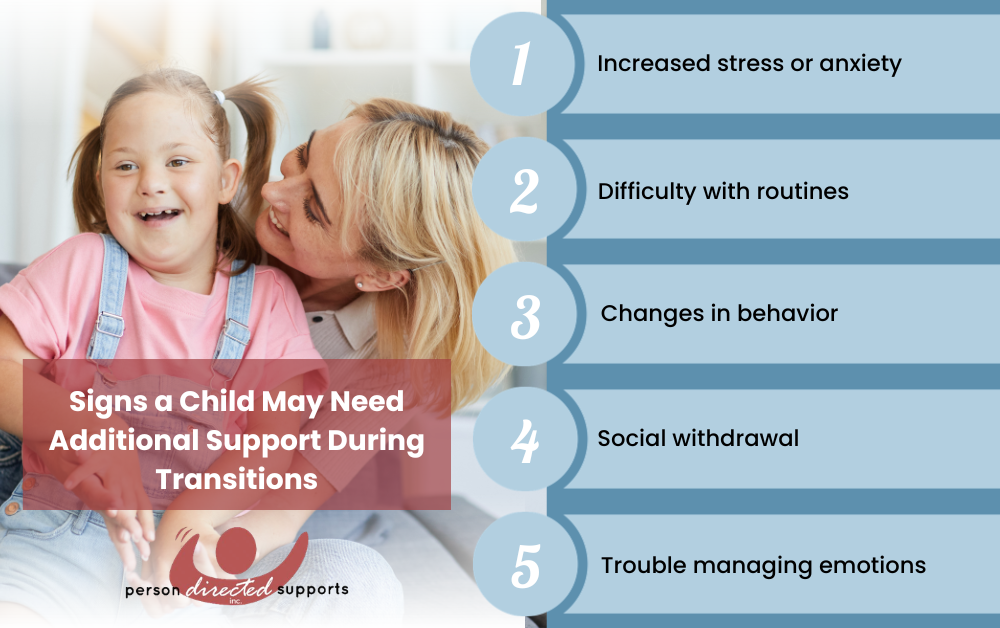
Common Signs a Child or Teen May Need Additional Support
Every child responds differently to transitions, but there are several signs that may indicate additional support could help.
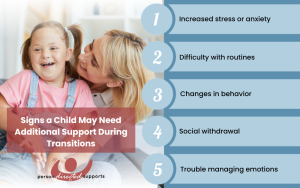
Increased Anxiety or Stress
Some children may become more anxious when routines change or new situations arise.
This may look like:
- Excessive worrying about school or schedules
- Difficulty calming down during transitions
- Increased nervousness about unfamiliar situations
Stress during transitions is common, but ongoing anxiety may signal a need for extra guidance and support.
Trouble Maintaining Daily Routines
Transitions can make it harder for children and teens to stay organized or manage everyday responsibilities.
Families may notice:
- Difficulty following schedules
- Trouble completing morning or evening routines
- Increased frustration with daily tasks
When routines become more challenging, additional support can help create structure and consistency.
Changes in Behavior
Behavior changes are often one of the clearest signs that a child may be struggling during transitions.
Possible changes may include:
- Increased emotional outbursts
- Withdrawal from activities or social interaction
- Frustration or difficulty coping with change
Behavior often communicates stress, discomfort, or uncertainty.
Social Challenges
Transitions can also affect social confidence and communication.
Some children or teens may:
- Avoid social situations or group activities
- Have difficulty connecting with peers
- Struggle with communication during stressful periods
Additional support can help children build confidence and strengthen social skills during times of change.
Difficulty Managing Emotions
Periods of transition can make emotional regulation more difficult. Children and teens may become more sensitive, frustrated, or overwhelmed than usual.
This may include:
- Trouble expressing feelings appropriately
- Difficulty handling disappointment or change
- Increased emotional reactions to everyday situations
Supportive strategies can help children develop healthy coping skills over time.
How Additional Support Can Help
Additional support can provide structure, consistency, and encouragement during challenging transitions.
Support services may help by:
- Creating predictable routines
- Building communication and coping skills
- Encouraging confidence and independence
- Providing guidance for both children and families
Support is not about taking control—it is about helping children feel more successful and supported.
The Importance of Early Support
Addressing challenges early can make transitions feel more manageable over time. Early support helps children build healthy routines, coping skills, and confidence before stress becomes overwhelming.
Providing support early can:
- Reduce frustration and anxiety
- Improve adjustment to new environments
- Help children feel more prepared and confident
Small steps and consistent guidance can make a meaningful difference.
How Families Can Support Children During Transitions
Families play an important role in helping children navigate change. Some helpful strategies include:
- Keeping routines as consistent as possible
- Preparing children for changes ahead of time
- Encouraging open and supportive communication
- Remaining patient and reassuring during stressful moments
- Seeking additional support when needed
Consistency and encouragement can help children feel more secure during uncertain periods.
When to Explore Professional Support Services
Families may want to explore professional support services when:
- Stress or behavioral changes begin affecting daily life
- School, routines, or relationships become more difficult to manage
- Families feel overwhelmed or unsure how to help
- Children or teens would benefit from additional structure and guidance
Seeking support is a proactive step that can help children continue growing and adapting successfully.
Supporting Children Through Change
Every child responds differently to transitions, and some may need additional support as routines and expectations change. Recognizing the signs early allows families to provide encouragement, structure, and guidance that help children feel more confident and secure.
Additional support is not about failure—it is about helping children and teens navigate change in healthy, supportive ways that encourage long-term growth and success.
Person Directed Supports provides individualized support services that help children and teens navigate change with confidence, structure, and encouragement. Reach out to learn more about available support options.