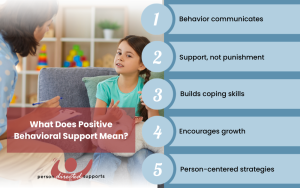
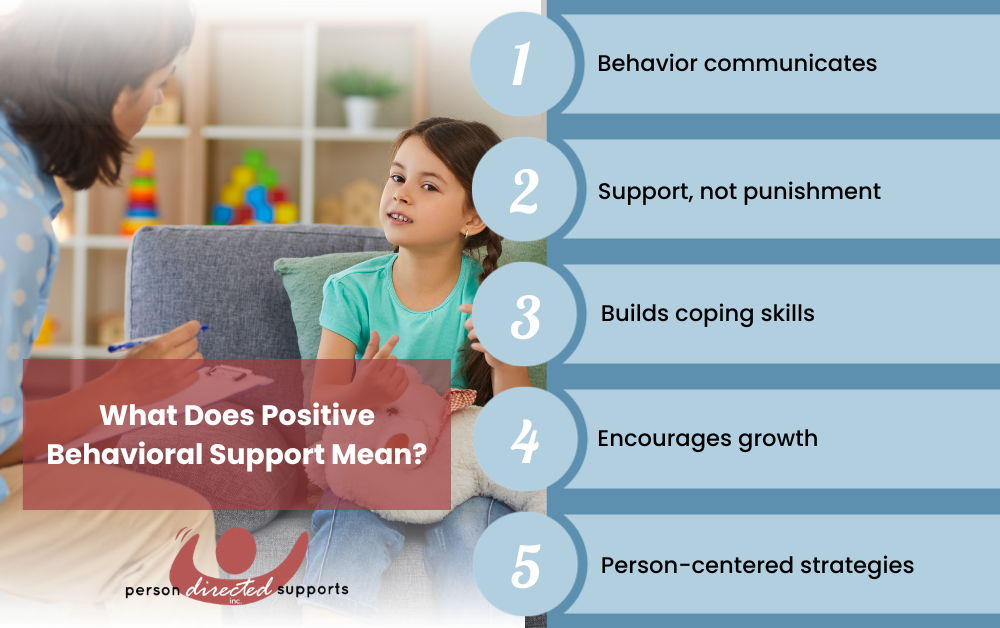
Behavior is often a form of communication. Sometimes individuals express stress, frustration, confusion, or unmet needs through their actions rather than words. This is why understanding behavior is such an important part of providing meaningful support.
Positive behavioral support focuses on helping individuals succeed by understanding behaviors, creating supportive environments, and encouraging healthy coping skills. Instead of focusing on punishment or control, this approach emphasizes growth, communication, and person-centered support.
What Is Positive Behavioral Support?
Positive behavioral support is an approach that helps individuals build positive behaviors and improve daily life through understanding, encouragement, and consistent support.
Rather than labeling behaviors as simply “good” or “bad,” positive behavioral support looks at why behaviors may be happening and identifies ways to help individuals feel more successful, supported, and understood.
This approach focuses on:
- Respect and dignity
- Individualized support strategies
- Building skills and confidence
- Encouraging positive outcomes over time
Positive behavioral support is rooted in person-centered care and aims to improve overall quality of life.
The Goals of Positive Behavioral Support
Positive behavioral support focuses on helping individuals grow and thrive in daily life. Common goals include:
- Encouraging positive behaviors
- Improving communication skills
- Reducing stress and frustration
- Supporting emotional regulation
- Building confidence and independence
- Improving quality of life
These goals help individuals feel more successful and supported in everyday situations.
Why Behavior Is More Than “Good” or “Bad”
Behavior often communicates something deeper. An individual may respond to stress, confusion, sensory overload, changes in routine, or difficulty expressing emotions through behavior.
Positive behavioral support encourages families and support teams to ask:
- What is this behavior communicating?
- What support or adjustment may help?
- How can we create a more successful environment?
This shift in perspective helps move the focus away from punishment and toward understanding and problem-solving.
Key Parts of Positive Behavioral Support
Positive behavioral support uses several important strategies to help individuals succeed.
Understanding Individual Needs
Every individual has unique strengths, preferences, challenges, and triggers. Positive behavioral support works best when support plans are personalized rather than generic.
Understanding the individual helps support teams respond more effectively and respectfully.
Creating Consistent Routines
Routines provide structure and predictability, which can help reduce stress and uncertainty.
Consistent routines may:
- Improve emotional regulation
- Reduce frustration
- Build confidence in daily life
Predictability often helps individuals feel safer and more comfortable.
Teaching Positive Coping Skills
Positive behavioral support focuses on helping individuals develop healthy ways to express emotions and manage challenges.
This may include:
- Communication skills
- Problem-solving strategies
- Emotional regulation techniques
- Healthy ways to respond to stress
Building these skills takes time, encouragement, and consistency.
Using Positive Reinforcement
Positive reinforcement encourages growth by recognizing and supporting successful behaviors.
This may include:
- Praise and encouragement
- Celebrating progress
- Providing positive feedback
- Reinforcing healthy coping strategies
Positive reinforcement helps individuals feel motivated and supported.
How Positive Behavioral Support Helps in Daily Life
Positive behavioral support can improve many areas of daily life, including:
- Communication and relationships
- Participation in routines and activities
- Confidence and self-esteem
- Community involvement
- Independence and daily living skills
When individuals feel supported and understood, they are often more comfortable participating in everyday life.
The Importance of Person-Centered Support
Positive behavioral support works best when it remains person-centered. This means:
- Respecting individuality and choice
- Building support around personal goals and needs
- Involving families and support teams collaboratively
Person-centered support helps ensure individuals feel heard, respected, and valued throughout the process.
Common Misconceptions About Positive Behavioral Support
There are several misunderstandings about positive behavioral support:
- It is not about controlling people
The goal is to support growth and understanding. - It is not punishment-based
Positive behavioral support focuses on encouragement and skill-building. - It only addresses behavior problems
In reality, it also helps build communication, confidence, and independence.
How Families and Support Teams Work Together
Collaboration is an important part of positive behavioral support. Families, caregivers, and support teams work together to create consistency and shared understanding.
Strong communication helps:
- Identify successful strategies
- Maintain routines across environments
- Support long-term progress and growth
Working together creates a stronger support system for the individual.
Supporting Growth Through Understanding
Positive behavioral support focuses on understanding individuals, building skills, and creating supportive environments where growth can happen. Rather than reacting to behaviors with punishment or control, this approach encourages communication, confidence, and long-term success.
With person-centered support, positive reinforcement, and consistent guidance, individuals can continue building the skills they need to navigate daily life with greater confidence and independence.
Support Growth Through Positive Behavioral Support
Person Directed Supports provides person-centered behavioral supports designed to help individuals build confidence, communication skills, and daily success. Reach out to learn more about personalized support options.