Person centered care focuses on one simple idea. Support should be built around the individual, not the system. Rather than applying the same approach to everyone, person centered care recognizes each person’s preferences, goals, strengths, and daily routines. In daily support services, this approach helps ensure individuals are respected, involved in decisions, and supported in ways that reflect who they are and how they want to live.
When applied consistently, person centered care shapes how daily support services are delivered. It influences routines, activities, communication, and skill development. It also guides how support staff interact with individuals, how choices are honored, and how independence is encouraged over time. Understanding how this works in everyday support helps families and individuals see how thoughtful, individualized support can make a meaningful difference in daily life.
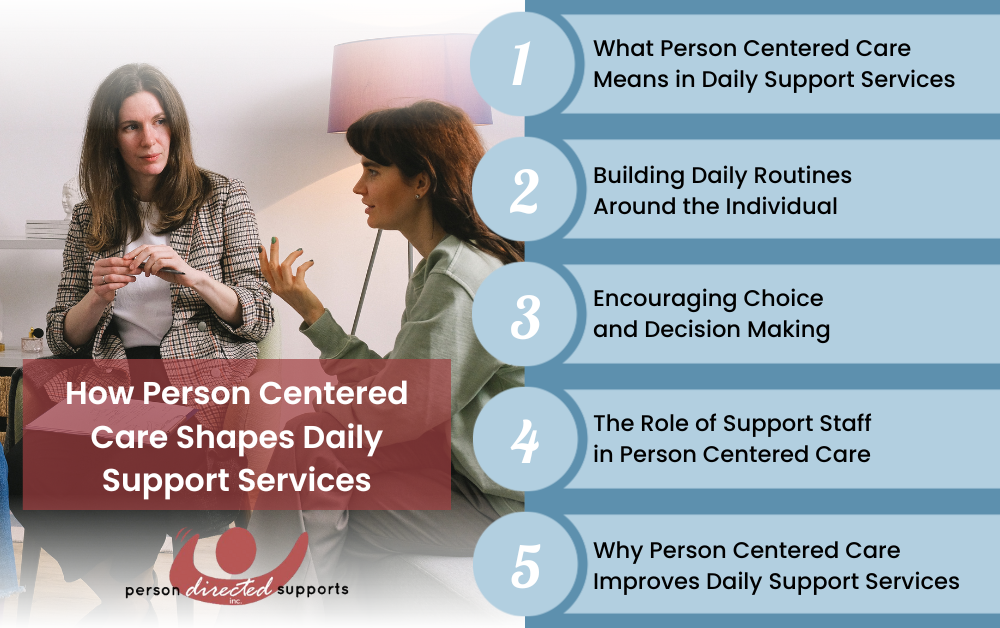
What Person Centered Care Means in Daily Support Services
Person centered care means that daily support services are shaped around the individual’s needs, preferences, and goals rather than a fixed program or routine. Support is not delivered the same way for everyone. Instead, it is adjusted to reflect what matters most to the person receiving services and how they choose to live their daily life.
In practice, person centered care focuses on listening, flexibility, and respect. Support plans are guided by personal goals, but day to day support remains adaptable. This allows individuals to have a voice in how their support is delivered, from how their day begins to how they engage with their community. By centering care on the individual, daily support services become more meaningful, consistent, and supportive of long term independence.
Building Daily Routines Around the Individual
Daily routines play a major role in comfort, confidence, and independence. Through person centered care, daily support services are designed to reflect an individual’s natural rhythms, preferences, and habits rather than following a rigid schedule. This approach helps create routines that feel familiar, respectful, and supportive.
Person centered care allows individuals to have input in how their day is structured. This can include choosing when to wake up, how meals are prepared, or how free time is spent. Support staff work alongside individuals to maintain consistency while remaining flexible when needs or preferences change. By shaping routines around the person, daily support services promote stability without limiting independence or personal choice.
Encouraging Choice and Decision Making
Person centered care places individuals at the center of everyday decision making, not just long term planning. Daily support services use this approach to ensure people are actively involved in choices that affect their routines, preferences, and sense of control.
In daily support, person centered care encourages choice in areas such as:
- How the day is structured and paced
- Which activities or outings are preferred
- When and how support is provided
- Social interactions and community involvement
- Personal goals that guide daily actions
By honoring these choices, daily support services reinforce independence and self confidence. Even small decisions help individuals feel respected and heard, which strengthens trust and encourages greater engagement in daily life.
The Role of Support Staff in Person Centered Care
.Support staff play a key role in how care is experienced on a daily basis. Their actions, communication, and consistency directly influence how supportive and respectful daily services feel.
Support staff take time to learn individual routines, communication styles, and comfort levels. Understanding these preferences helps ensure support feels familiar, respectful, and aligned with each person’s expectations rather than generic or rushed.
Person centered care also allows staff to adjust their approach as goals, abilities, or preferences change over time. Support remains flexible while still providing stability and structure. When consistent staff are present, trust and confidence grow, making daily support services more effective and empowering.
Why Person Centered Care Improves Daily Support Services
Person centered care strengthens daily support services by focusing on what works best for each individual rather than applying a one size fits all approach. When support is tailored to personal goals, routines, and preferences, individuals are more likely to feel confident, engaged, and supported in their daily lives.
Person centered care improves daily support services by helping to:
- Encourage independence through meaningful choice
- Build confidence through consistent, respectful support
- Support skill development at an individual pace
- Strengthen relationships between individuals and support staff
- Improve overall quality of life
By centering daily support around the individual, services become more effective, flexible, and aligned with long term goals.
Conclusion
Person centered care shapes daily support services by keeping the individual at the heart of every interaction, routine, and decision. When support is guided by personal goals, preferences, and strengths, daily services feel more respectful, consistent, and meaningful.
At Person Directed Supports, person centered care turns daily support services into more than assistance with tasks. It creates opportunities for growth, independence, and connection. By focusing on the individual rather than the system, this approach allows support to evolve alongside changing needs while continuing to promote dignity and quality of life.