Mental and emotional well-being are deeply influenced by the type of care individuals receive in their daily lives. For people with disabilities or specific support needs, personalized support provides assistance tailored to unique preferences, routines, and goals. Adaptation to individual requirements enhances confidence, emotional stability, and resilience. Organizations like Person Directed Support understand that effective care addresses emotional, social, and practical needs together. This holistic approach ensures that individuals feel supported in every aspect of their lives.
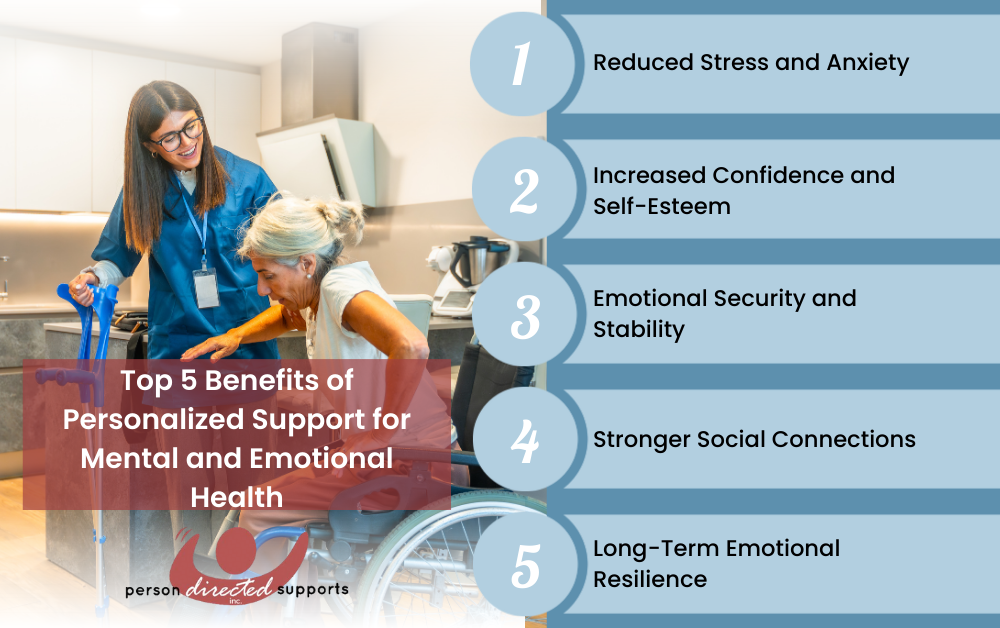
Reduced Stress and Anxiety
Adapting to Individual Needs
Personalized support adjusts to routines, preferences, and comfort levels, which reduces daily stress and uncertainty. People feel more secure knowing that their care is designed around them. Over time, this stability can significantly lower anxiety levels and promote mental calm. By focusing on individual needs, caregivers create a predictable environment that fosters peace of mind.
Key benefits include:
- Flexibility to accommodate personal routines
- Reduced daily stress and anxiety
- Greater comfort in familiar, predictable support
Consistency Builds Emotional Reassurance
Knowing that support is consistent helps individuals feel emotionally secure. Familiar caregivers and stable routines provide reassurance and trust. People feel safe knowing that assistance is reliable. Emotional reassurance supports improved mood and coping ability. Stability encourages individuals to approach daily life with confidence.
Stability Supports Mental Well-Being
Stable, tailored support allows individuals to focus on daily tasks without worry. Reduced stress improves emotional regulation and mental clarity. People experience a calmer, more balanced mindset. Consistency in support fosters healthier coping strategies. Over time, these habits enhance overall mental well-being.
Increased Confidence and Self-Esteem
Achieving Personal Goals
Tailored support enables individuals to set and reach personal milestones at their own pace. Achieving goals fosters a sense of achievement and independence. This directly contributes to stronger self-esteem and self-worth. People gain confidence in their abilities and choices. Celebrating milestones reinforces motivation and a positive outlook.
Key benefits include:
- Encourages goal-setting and personal achievement
- Builds independence and self-confidence
- Reinforces self-worth and motivation
Empowering Daily Decisions
Personalized support allows individuals to make choices aligned with their values. Decision-making autonomy strengthens confidence in managing daily routines. People feel empowered to direct their own lives. This fosters a sense of control and ownership. Autonomy encourages continued personal growth and satisfaction.
Fostering Self-Belief
When care aligns with individual abilities and preferences, trust in oneself grows. Successes build pride and resilience over time. Personalized support encourages taking on challenges safely. Each achievement enhances self-belief and emotional stability. Over time, these experiences contribute to long-term confidence.
Emotional Security and Stability
Creating Safe Environments
Support designed around personal needs ensures individuals feel emotionally safe. Caregivers who understand emotional triggers can respond effectively. People feel heard, valued, and respected in these environments. Emotional security forms the foundation for healthier coping strategies. Safe spaces promote a sense of stability and well-being.
Key benefits include:
- Care tailored to personal triggers and preferences
- Greater trust and emotional reassurance
- Environments that encourage expression and comfort
Building Trust with Caregivers
Consistent, empathetic support strengthens the bond between individuals and caregivers. Trust reduces vulnerability and emotional uncertainty. Individuals are empowered to voice their needs and emotions. Strong trust leads to improved mental health outcomes. Positive relationships form the backbone of emotional resilience.
Supporting Healthy Coping
Personalized support teaches adaptive strategies for managing stress and challenges. Individuals learn to navigate difficult situations with guidance and confidence. Emotional stability improves through consistent reinforcement. Caregivers model effective coping techniques in everyday situations. These skills foster long-term mental and emotional resilience.
Stronger Social Connections
Encouraging Meaningful Interaction
Personalized support includes social engagement strategies tailored to the individual. Activities such as community participation, family interaction, or one-on-one companionship strengthen bonds. Meaningful relationships improve emotional health and confidence. Support ensures individuals remain connected in ways that suit them. Social engagement fosters a positive mental state and reduces loneliness.
Key benefits include:
- Encourages participation in meaningful activities
- Builds relationships and emotional support networks
- Reduces isolation and loneliness
Reducing Isolation
Tailored approaches help individuals maintain regular contact with peers, family, or community members. Feeling included in social networks reduces emotional distress. Personalized support ensures no one feels left out or disconnected. These connections improve mood and overall well-being. Reducing isolation promotes a sense of belonging and purpose.
Promoting Positive Mental States
Strong social connections enhance self-esteem and reduce stress. Individuals feel valued and supported within their relationships. Personalized support nurtures communication and emotional expression. Connection strengthens resilience against emotional challenges. Positive relationships contribute to a healthier, more balanced mindset.
Long-Term Emotional Resilience
Developing Coping Strategies
Consistently receiving support that adapts to personal needs helps individuals build effective coping skills. Learning to manage stress reinforces confidence and emotional flexibility. Individuals gain strategies to handle unexpected changes or challenges. Personalized support fosters long-term mental strength. Over time, these strategies improve the overall quality of life.
Key benefits include:
- Builds adaptive coping skills
- Strengthens emotional resilience
- Equips individuals to manage challenges effectively
Building Mental Strength
Ongoing support encourages the development of mental toughness and flexibility. Individuals are better prepared to face life’s difficulties. Emotional stability is reinforced through consistent guidance. Personalized support helps maintain confidence under pressure. Long-term mental strength supports independence and well-being.
Sustaining Quality of Life
Holistic, individualized care ensures emotional and mental needs are continuously addressed. Personalized support helps people thrive despite challenges. Resilience leads to higher life satisfaction and independence. Emotional well-being becomes central to everyday life. Sustained support enhances confidence, stability, and overall fulfillment.
Conclusion: Experience the Benefits of Personalized Support
The mental and emotional advantages of personalized support are profound and lasting. Reduced stress, higher confidence, emotional security, stronger social connections, and long-term resilience all contribute to a healthier life. Tailored care equips individuals to navigate challenges and thrive with greater independence and self-assurance. Person Directed Support is committed to providing compassionate, individualized care that prioritizes mental well-being.
Reach out to Person Directed Support today to discover how personalized support can help enhance comfort, independence, and confidence for you or your loved one.